What is Grameen Bank?
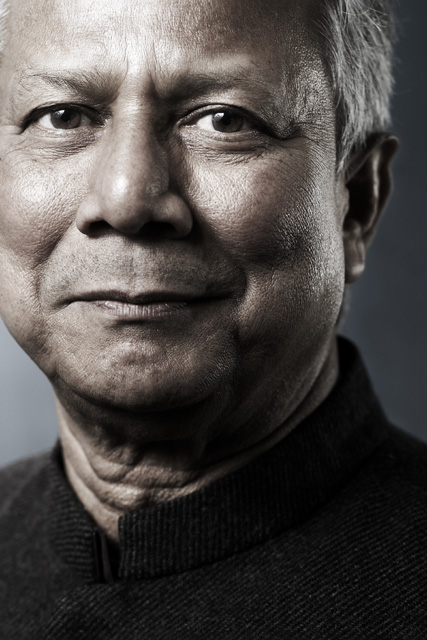
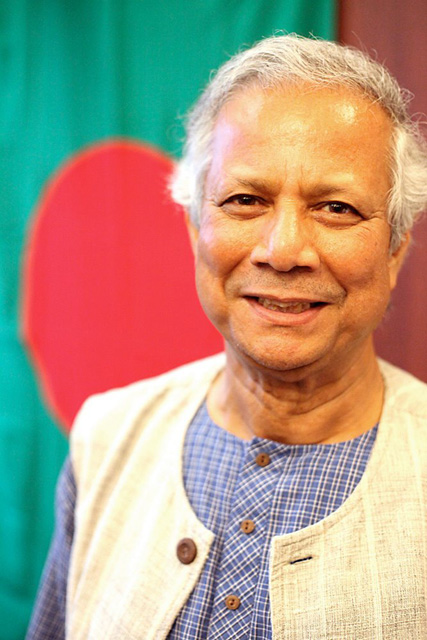
In the early 1970s, shortly after Bangladesh gained its independence, political turmoil and natural disasters threw the country into total chaos, with poor farm villagers in particular suffering from extreme hunger. Dr. Yunus, having witnessed starvation and poverty, founded Grameen Bank (“Village Bank” in Bengali) exclusively for the poor with the aim of alleviating poverty.
Grameen Bank provides collateral-free small loans to the poor who cannot borrow money from conventional banks. The distinctive features of Grameen Bank’s microcredit are as follows:
Microcredit is based on trust, not on collateral or legally enforceable contracts.
It is offered to create self-employment for income-generating activities and housing for the poor, as opposed to consumption.
Rather than people coming to the bank, the bank should go to the people who are planning to apply for loans.
A borrower must join a group of five. Only when the first two eligible borrowers have made their payments within six weeks are the others eligible for loans.
Microcredit provides such support as guidance and consultation for borrowers’ livelihoods and businesses along with their loans.
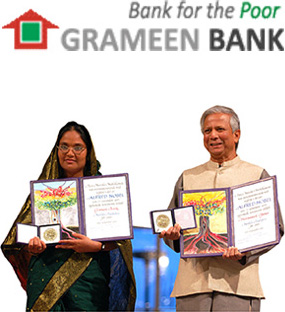
Grameen Bank developed a methodology and system tailored to the economic needs of the poor and accordingly established loan requirements for them. The bank’s loan process has enabled poor people to acquire the skills necessary to make a living and earn a steady income. For this accomplishment, Dr. Yunus and Grameen Bank were awarded the Nobel Peace Prize in 2006.
At present, Grameen Bank has grown into a nationwide financial institution offering services to all poor people in rural villages of Bangladesh.
Of the bank’s eight million borrowers, 97 percent are women, with a repayment rate of about 98 percent.